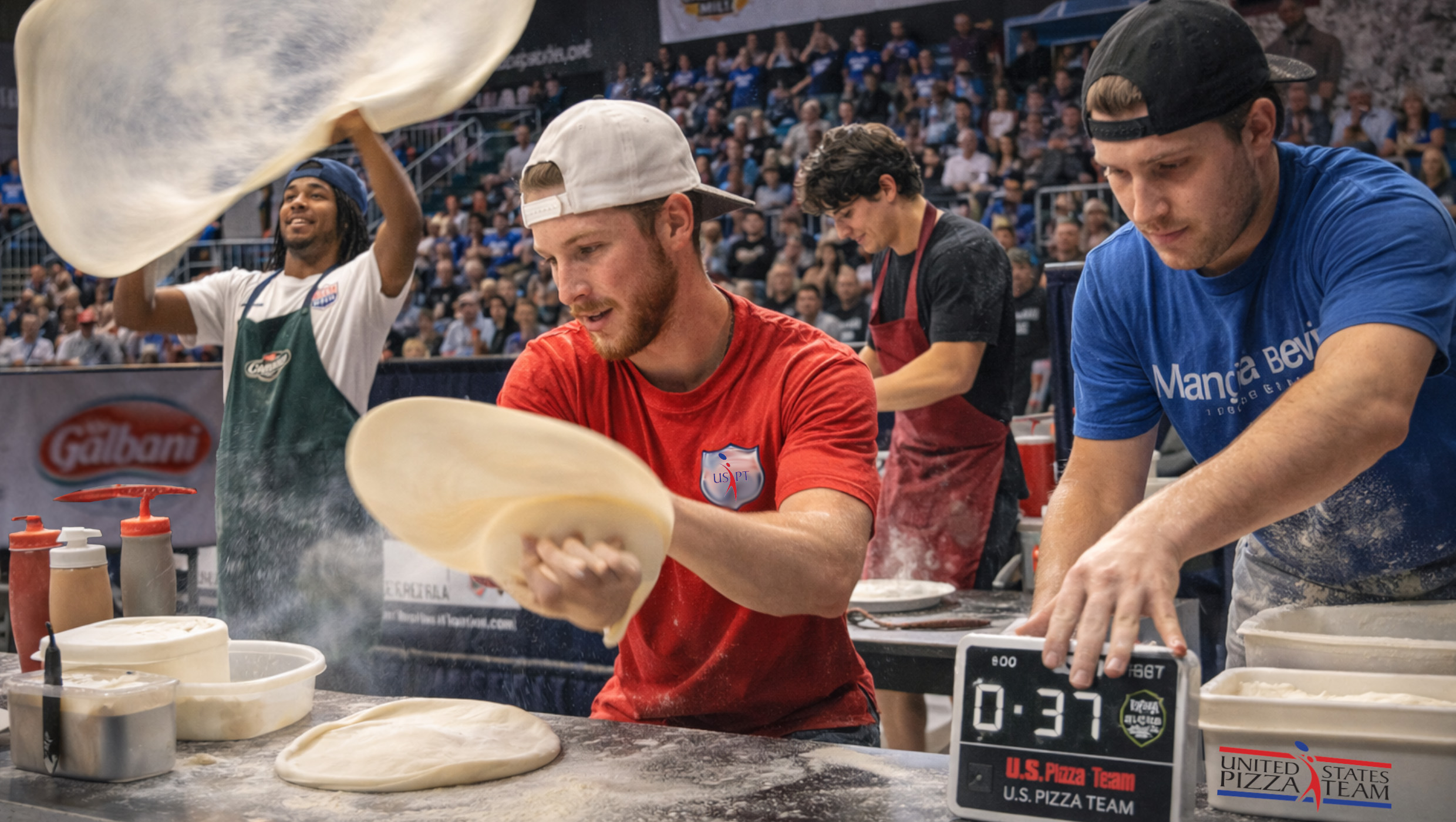
In a sport born in real pizzerias, the next USPT champion may already be on your schedule.
Pizza work has always been athletic long before anyone bothered calling it a sport. Anyone who has survived a Friday rush knows the footwork, stamina and controlled chaos required to keep the line alive. What many forget is that some of the biggest pizza competitions on the planet were born right in the pizzeria.

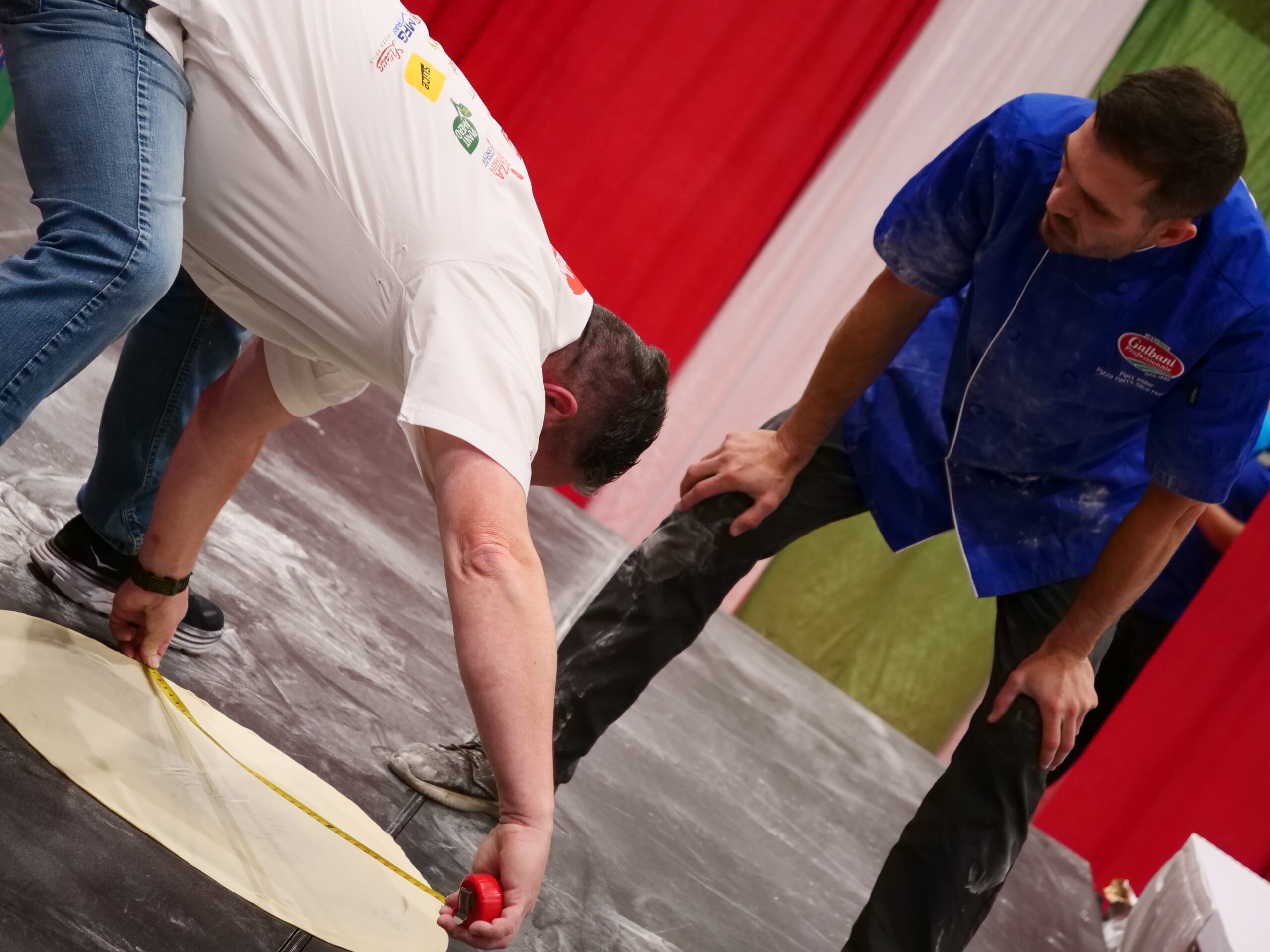
Largest Dough Stretch came from someone testing how far a dough could go before tapping out. Fastest Pie Maker came from those nights when you’re 20 pies deep and moving on instinct. Freestyle spinning grew in open kitchens, where tossing dough doubled as workflow and entertainment. These weren’t manufactured sports; they grew straight out of real pizza life.
As USPT Team Captain Tore Trupiano of Mangia e Bevi says, “These events prove real pizza skill under pressure. Stretching, spinning, speed work. They show what happens in the shop every day. Control, consistency, endurance. It reminds people that pizza makers are both artisans and athletes.”
And when those skills turn into medals or viral videos, the spotlight doesn’t just land on the competitor. It lands on the shop that trained them. A strong acrobat or speed athlete can put a pizzeria on the map faster than any ad campaign, and, in some cases, can actually lead to the latter.
The Athlete Hidden in the Kitchen
Every pizzeria has a natural athlete. The reflex ninja who catches a falling pizza on the peel before it hits the floor. The dough stretcher
who burns through five skins without blinking. The crew member who moves like tossing dough is just another set of dance moves—a gritty kitchen ballet, if you will. Freestyle Acrobatics channels that instinct. Training builds strength, timing, control and efficiency. It sharpens rush-ready mechanics and adds a level of fun you can’t get without bringing in a traveling petting zoo.
USPT Athletics Coach Dave Sommers of Mad Mushroom has watched these instincts turn into performance for years. “The competitive nature of the sport motivates athletes to work harder at [their job],” he says. “They learn how to get better at their craft through camaraderie and conversations with other pizzaioli.” Competition doesn’t distract from the job; it amplifies everything good about it.

Nicholas Harper of Peace of Pie on Hartwell is proof of that pipeline. He discovered pizza athletics in Parma in 2022. “I was blown away,” he says. “I knew I wanted to try Largest Stretch immediately.”
Harper practiced constantly in the shop and quickly went from intimidated newcomer to repeatedly winning and placing in Largest Dough and Fastest Pie Maker. “Once I realized I could be competitive, I couldn’t wait for the next event.”
The Sport Already Lives on Social Media
Spend ten seconds on TikTok and you’ll see pizza athletes treating the make line like the Olympic trials. Independents and big chain employees alike, all posting clips of staff spinning on break, tearing through speed rounds mid-shift, and tossing dough with full Big Dough Energy. They challenge other shops, rack up millions of views, and the internet eats it up.
This visibility becomes marketing without a budget. A spinner becomes part of your brand—drawing customers, attracting employees, and building momentum automatically.
Peace of Pie even designed  their floorplan around it. “We installed a window so customers could watch us hand toss,” Harper says. “Training for Largest and Fastest drastically improved my speed and dough control during service.”
That window is a stage, and the crowd loves it.
Sommers agrees with Harper. “When you get a few people battling each other, morale rises,” he says. “Iron sharpens iron. It becomes a stepping stone: who can prep sauce cups faster, who can cut vegetables to spec better. It builds a stronger team.”
The Spotlight Feels Like a Real Sport Because It Is One
Spinning grew up between ovens and prep tables, but once someone steps onto the competition floor, everything changes. Bright lights.  Cheering crowds. Adrenaline. Real pressure. In 2019, the USPT even landed on ESPN’s The Ocho for its Winter and Spring Culinary & Athletic Trials, sharing airspace with dodgeball, cornhole and cherry pit spitting. Pizza proved it wasn’t the oddball; it was the headliner.
Competition transforms people. Harper was intimidated at first. “Everyone was so fast,” he says. “So I studied every competitor I could.” Now he moves with purpose: stack, press, flatten, stretch, separate, screen. “Once I got the technique down, I couldn’t wait for the next event.”
Sommers sees emotional growth too. “Spinning helps with self-esteem. Getting in front of others and showing something you’ve practiced takes courage. The community is welcoming and helps athletes with stage presence and confidence. It helps in athletics and in life.”
The Practical Benefits Spread Through the Whole Shop
Acrobatics isn’t just a stage performance. It improves everyday work. Strength, endurance, dough control, consistency and composure—these are the fundamentals of a strong kitchen.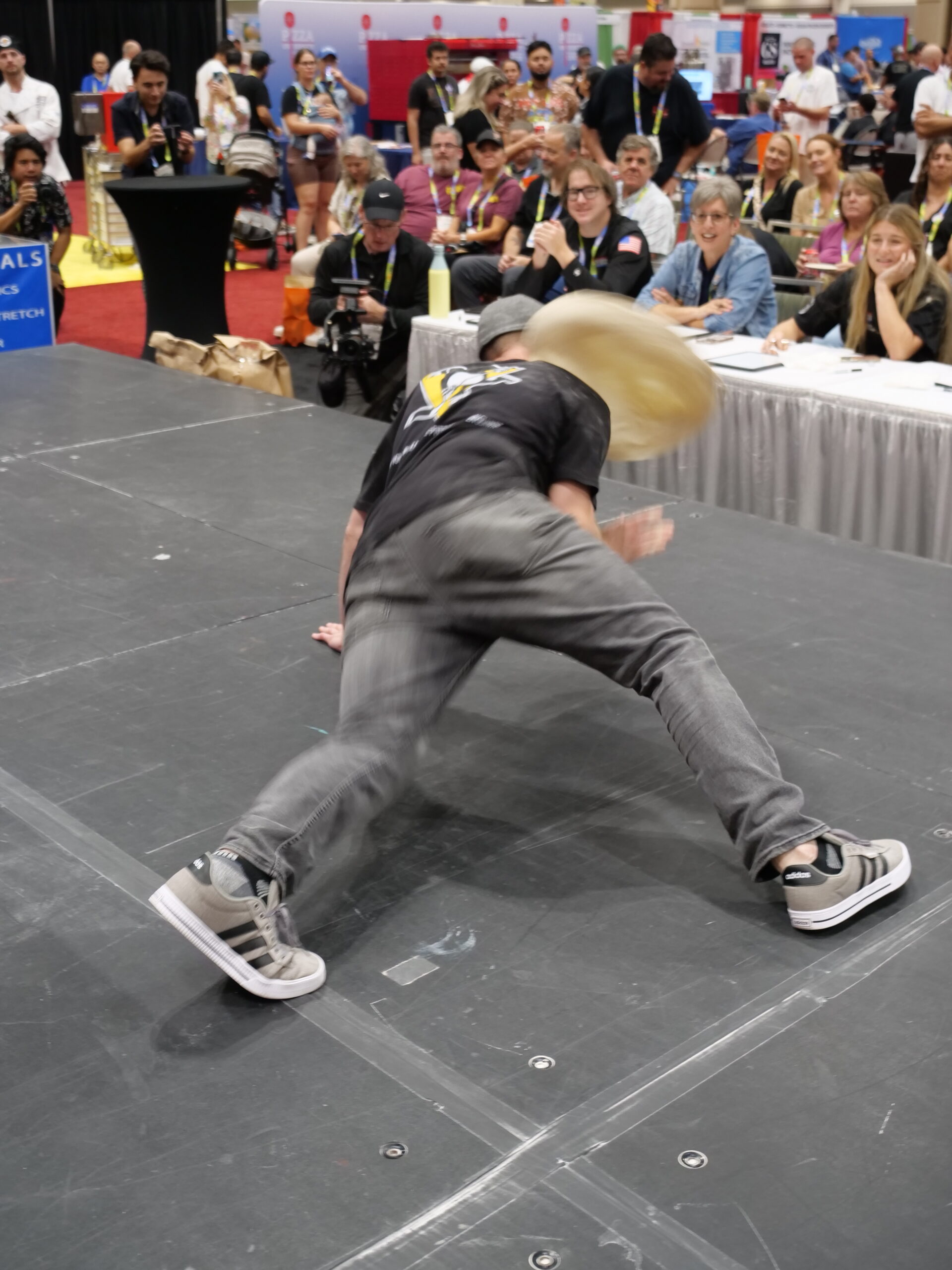
Trupiano sums it up simply as “fast but correct. That mindset carries into rush service.” Sommers adds, “Fastest Box Folder builds attention to detail, friendly competition and morale. It improves everything else in the store.” Harper notes, “Practicing these drills and learning tricks has helped me handle dough better and still keep up with the rush.”
And pizza athletes don’t bounce from job to job. They stay with the shop that supports them. Sommers has seen staff fall in love with the craft through competition. “Many either stay in the industry or come back years later. Supporting them goes a long way to building a confident, caring team.”
You Build Them in the Shop, The USPT Will Send Them to Italy
The opportunity is real, and it comes twice a year. The USPT annually hosts both the REAL California Pizza Challenge and the Galbani Professionale Pizza Cup, offering prizes across both culinary and athletic categories. On the athletic side, freestyle acrobats compete for one of four grand-prize trips each year to Parma, Italy, for the Campionato Mondiale della Pizza (World Pizza Championship). For a young employee, that trip can change everything. For an operator, it brings recognition and 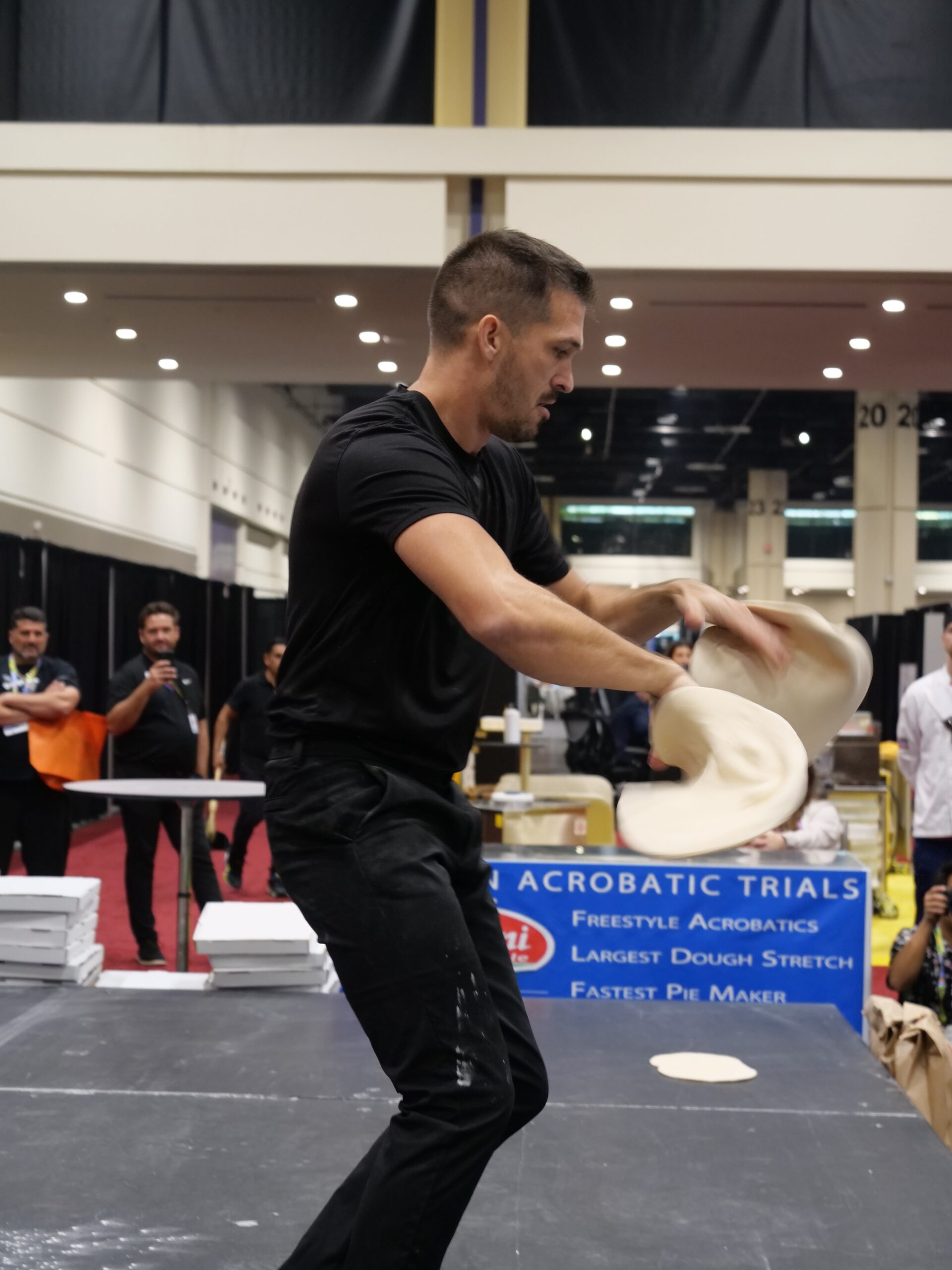 long-term community credibility.
The Next Generation Is Already in Your Shop
If you’ve got someone on staff who moves with natural rhythm, thrives during rushes, learns fast, or tosses dough just because it feels right, you may already have your next spinner. The future of the U.S. Pizza Team isn’t hiding elsewhere. It’s standing in your kitchen right now, building the instincts this sport is built on.
And make no mistake—the USPT wants that person. We’re actively searching for young, fast, adaptable athletes who bring real energy to the floor. And since spinners typically are multi-disciplined pizza athletes, they especially are the heartbeat of pizza athletics. Give someone a practice dough, encourage them, and you might open a pathway they never knew existed.
The fastest path from pizzeria to world stage starts inside your own walls. Host a stretch-off, a speed-round challenge, box-folding races, or a quick freestyle session during downtime, and you’ll sharpen skills, boost morale, and maybe discover the person who carries your shop’s name onto the national stage—or all the way to Italy.
Pizza athletics was born in pizzerias just like yours, and the next champion is likely already in your kitchen.
If you’ve got that kind of athlete on staff, the USPT wants to meet them.
Learn more at www.uspizzateam.com/membership.