By Charlie Pogacar, PMQ Sr. Editor
At the Pizza Tomorrow Summit, held last week in Orlando, the Galbani Professionale Pizza Cup isn’t just another stage on a busy show floor—it’s one of the main attractions. During the three-day show, there was rarely an empty seat as pizzaiolos proved their mettle through various culinary and acrobatic competitions.
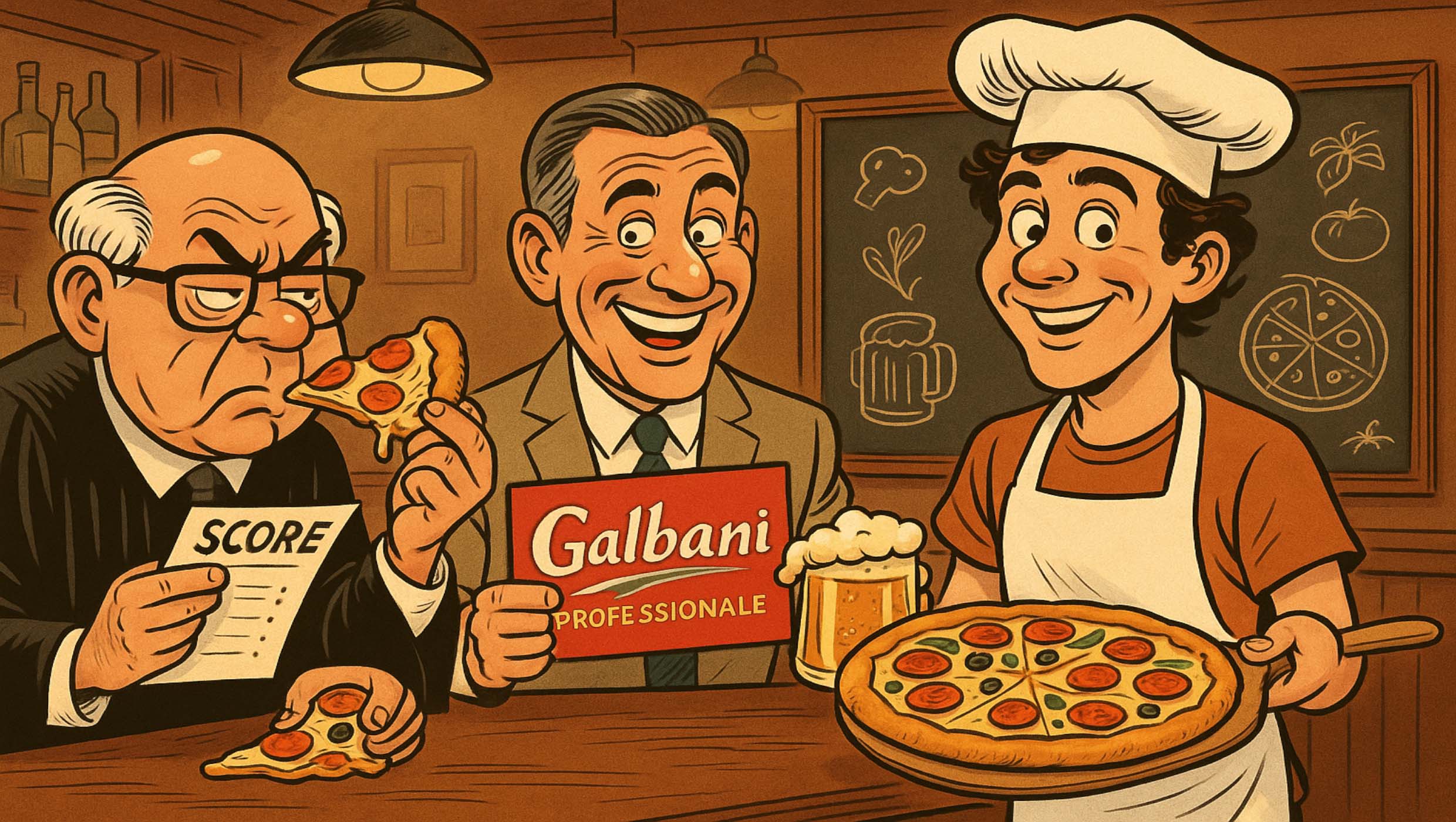
To understand the fourth annual Galbani Cup, you have to view it from three angles: the sponsor fueling the excitement, the judges shaping its standards and the competitors putting their craft on the line.
The Sponsor: Why Galbani Shows Up Big
For Galbani Professionale national sales manager Jim Binner, the Cup represents more than brand placement. It’s a community investment.
Related: After Expanding to Three Days, Pizza Tomorrow Summit Boasts Record Attendance
“We’ve been sponsors for quite a while,” Binner told PMQ Pizza. “[Team members] are hard workers, good people in the pizza world. Partnering with the U.S. Pizza Team helps us get the word out about our cheese, our brands and our people.”
Binner came up as a chef before moving to the business side, and trade shows and competitions like this reconnect him with that world. “My hashtag is ‘food is fun,’” he said. “I understand what pizza operators go through, and I want to help them be more successful.”
This year, Galbani’s booth was bigger than ever and located next to the competition stage. Binner enjoyed that. It let him mingle with trade show attendees and Pizza Team members while keeping one eye on who might win the grand prize: A trip to Italy to compete in the World Pizza Championships.
“It’s about people,” Binner said. “This show is like a family reunion for the industry.”
The Competitor: A Flag, a Style and a Clock
For competitor Fernando Greco—known online as @OG_PapaFern—the Cup is where passion meets pressure. His specialty is Argentinian-style pan pizza, a thick, cheese-heavy format that takes 30 minutes to bake. That complicates things for him, as rules dictate exactly 30 minutes from dough-touch to presentation.
Greco mentioned a particular struggle this year: The Orlando area faced regular low temperatures. “Yesterday it was 30 degrees in the hall,” he said. “My dough never warmed up, and I didn’t get the rise I wanted. That’s competition—you don’t get a second chance.”
For Greco, however, competing is just another way he spreads the word about Argentine-style pizza. “I’m representing my country,” he said. “I’m not going to change the tradition just to score creativity points.”
This year was a milestone—not because he won, but because another pizzaiolo competed with an Argentinian fugazzeta after seeing Greco make one at a previous expo. “That was huge,” he says. “It means it’s spreading.”
Educating While Judging
Billy Manzo—longtime competitor but first-time judge—approached being on the other side of the competition stage the same way he approaches running restaurants: with high standards and an educator’s mindset. “I make massive [amounts of] notes,” he says. “If competitors want to read them, I’m willing to teach.”
Judging, Manzo found, reveals how small mistakes—hydration errors, dough temperature issues, rushed handling—can make or break a pie. But Manzo is careful not to confuse feedback with trash talking. For him, the best part of judging wasn’t the authority—it was the chance to quietly help raise the bar.
“It’s not about ripping someone apart,” he says. “There has to be a next generation coming, and part of the job is helping them understand the science.”