Tracy Morin is PMQ’s associate editor.
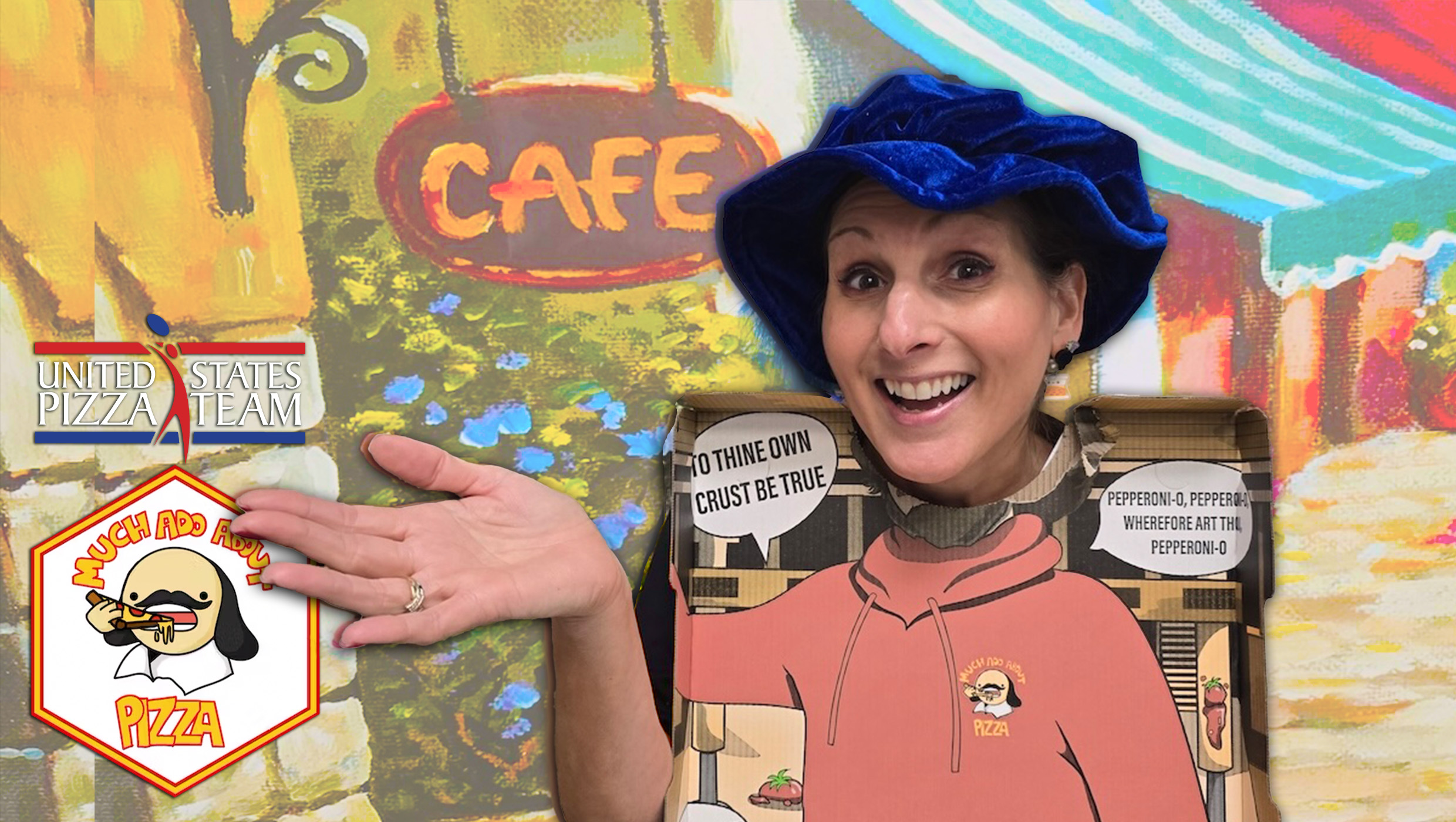
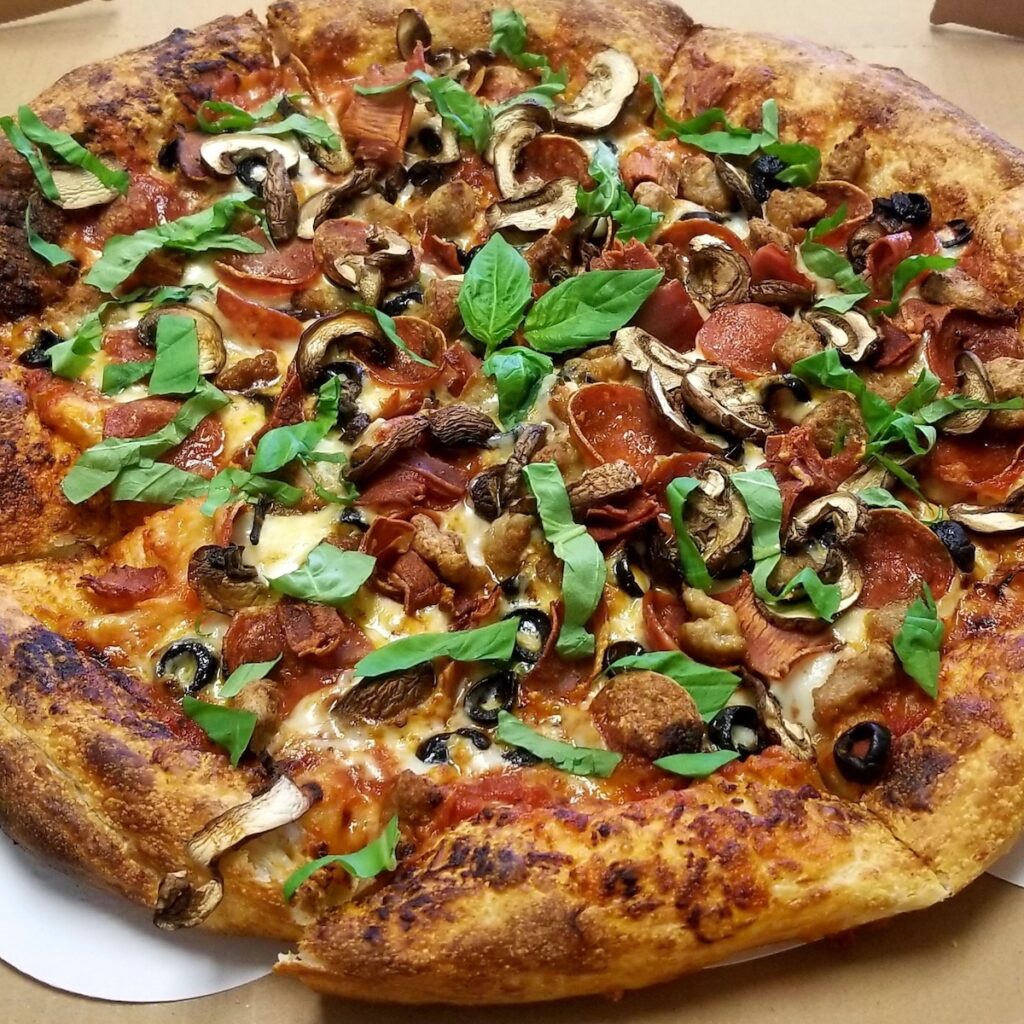
Pleasanton, California-based Much Ado About Pizza have long been on PMQ’s radar—and not only because husband-and-wife managing partners Mark and Kira Zabrowski are high-scoring competitors with the U.S. Pizza Team. Much Ado’s unique Shakespearean theme commands literature lovers’ attention, including branding with a cartoon of The Bard himself (eating a pizza slice, of course) and “Shakespearean-style” sourdough pies with Shakespeare-inspired names like Taming of the Chew. (So as not to overlook one of Shakespeare’s contemporaries and rivals, poet and playwright Christopher Marlowe, the couple also offers Marlowe rectangular pies.)
Recently, Kira sat down with PMQ to discuss more about her pizzeria’s theme, how it helps the couple stand out in a competitive market, and how they carry the theme through from menu and concept to in-store experience and community contributions.
PMQ: Tell us about your path to the pizza industry/pizzeria ownership.
Kira Zabrowski: I didn’t set out to open a pizzeria. I set out to make really good pizza for my family. I had a business idea that started at home, with flour on the counter, kids on their Zoom classroom upstairs, a husband who thought I was crazy but was super supportive of my wild dream, and a deep love of feeding people.
I come from a background in community theater and education, and for years I poured my creative energy into storytelling, baking and caring for my family. During the pandemic, like so many others, our world slowed down—and my sourdough starter sped up. My husband, Mark and I both began obsessing over fermentation, digestibility and flavor, experimenting with pizza dough that felt both nourishing and indulgent. What started as a way to bring comfort and joy to the family quickly became something friends and neighbors sought out, then requested, then insisted we share more widely.
As the business idea grew, competitive pizza making entered the picture—almost accidentally at first—and pushed my husband and I in our pizza craft. Competing sharpened our skills, built confidence, and connected us to an incredible pizza community. What surprised me most was realizing that this industry values collaboration as much as competition.
Today, Much Ado About Pizza is a small, family-run pizzeria where my husband and I run the day to day with some help from our teenagers, where community outreach is as important as awards, and where pizza remains both our passion and our creative outlet. We weren’t born into this industry—but upon reflection, every new challenge led us exactly where we were meant to be: telling stories, building community and doing it all through pizza.
PMQ: Why did you choose to do a themed pizzeria in general, and why did you choose Shakespeare?
Zabrowski: Much Ado About Pizza was born as a passion project, not a pivot. I’m a longtime vegetarian, so quality ingredients and a balanced menu were always going to be important to us. I wanted to create pizza that felt good to eat, told a story and reflected who we are—rooted in community, a little theatrical and deeply heartfelt. The Shakespeare-inspired name was a natural extension of my love for the arts—and the idea that pizza, like theater, brings people together around a shared experience.
I’ve always believed that food is an experience, not just a product, and a theme helps tell that story the moment someone walks through the door. A themed pizzeria gave me a creative framework—something that could spark curiosity, invite conversation and make the experience feel a little more memorable than just grabbing a slice.
Shakespeare was a natural choice because theater has always been part of my life. I spent 25 years as a theater and English teacher and worked in community theater long before pizza entered the picture. Shakespeare’s work is timeless, accessible and meant for everyone—much like pizza itself. You don’t need to be an expert to enjoy it; you just need to show up.
The language, humor and characters gave us a playful way to name pizzas, tell stories and connect with our community without taking ourselves too seriously.

PMQ: How does having a theme help differentiate your pizzeria from others in the area, and does it give you other advantages?
Zabrowski: In an area with a lot of great pizza options, having a theme gives people something to latch onto right away. The Shakespearean concept makes us memorable before someone even tastes the pizza. It sparks curiosity, starts conversations, and helps guests feel like they’re walking into something personal, not just another pizzeria. It is important to share part of yourself in this theme and branding. It helps to build community.
The theme also gives us a built-in way to tell our story. From pizza names to menu descriptions to social media, it creates a consistent voice that feels fun and approachable. It helps people remember us, talk about us and come back—not just for the pizza, but for the experience.
Practically speaking, it gives us creative freedom. Shakespeare is timeless, playful and expansive, so we’re never boxed in. We can do seasonal features, special events or collaborations that feel natural instead of forced.
At the end of the day, the biggest advantage is connection. Theater and pizza have a lot in common—they’re both meant to be shared. The theme helps us create a place where people feel comfortable, welcomed and part of our family, and that’s been a huge part of our success.
PMQ: Are you located in a fairly competitive market, where it’s important to stand out?
Zabrowski: Yes—the East Bay area is a very competitive pizza market. There are so many talented makers, great independent shops, beloved neighborhood spots, and well-established regional brands, all within a short drive. People here know good food, and they have choices—which keeps you on your toes.
But that competition is also energizing. It pushes you to elevate your pizza, refine your voice and find ways to stand out. Standing out in a crowded market forces you to be clear about who you are, why you do what you do, and what you want guests to feel when they walk in.
Competition in the East Bay also brings community. We’ve met other makers who share ideas, mentor each other and push the whole region forward. Rather than seeing competition as a threat, we see it as motivation to keep learning and improving—and to make pizza that really resonates with the people who live here.
PMQ: What do you love about Shakespeare? What is your favorite work, and what works would you recommend to a Shakespeare beginner?
Zabrowski: What I love most about Shakespeare is how human his work is. The stories are centuries-old, yet the emotions—love, jealousy, doubt, ambition, humor—still feel completely familiar. Hamlet has always been especially close to my heart. I loved teaching it, because it asks big questions and trusts people to lean into the messiness of being human. It’s layered, thoughtful and a little dramatic—in the best way.
Naturally, it became a pizza. Our Ham-let is one of our guests’ favorites: ham, prosciutto, green bell peppers, pineapple, baby bell peppers and fresh arugula. It’s a little sweet, a little salty, a little unexpected—and, yes, it absolutely invites debate, much like the play itself.
For Shakespeare beginners, I always suggest starting with the sonnets. That’s how I hooked my students. They’re short, emotional and surprisingly relatable, and they help people realize Shakespeare isn’t something to fear—he’s someone to connect with.
As a performer, I’m especially drawn to the comedies. Twelfth Night and A Midsummer Night’s Dream are pure joy to perform—clever, chaotic and full of heart. That playful spirit is what we try to capture at Much Ado!

PMQ: How does the Shakespeare theme carry through your menu, mission, store design, branding, marketing, social media, and more?
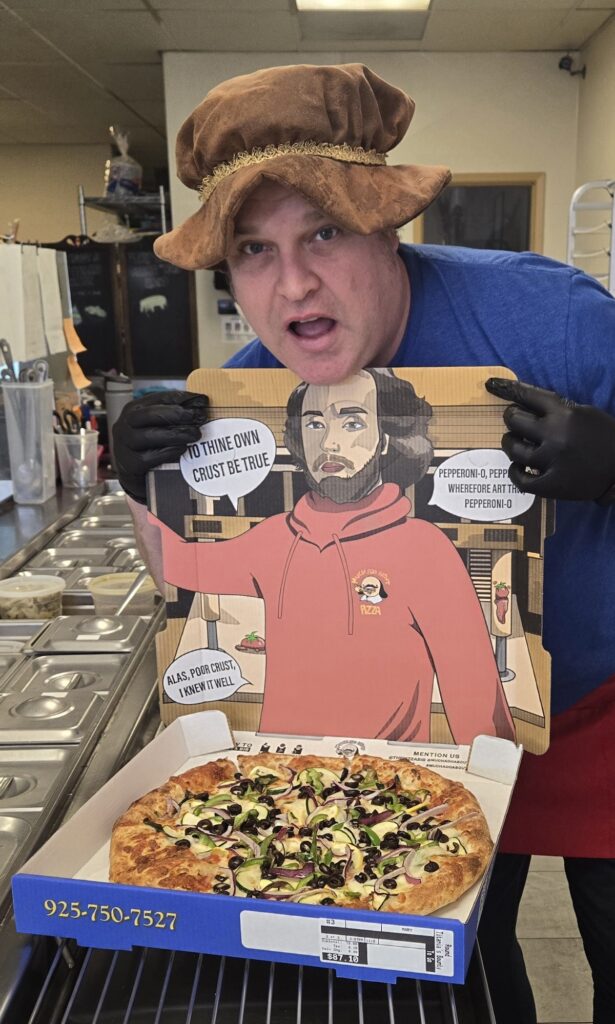
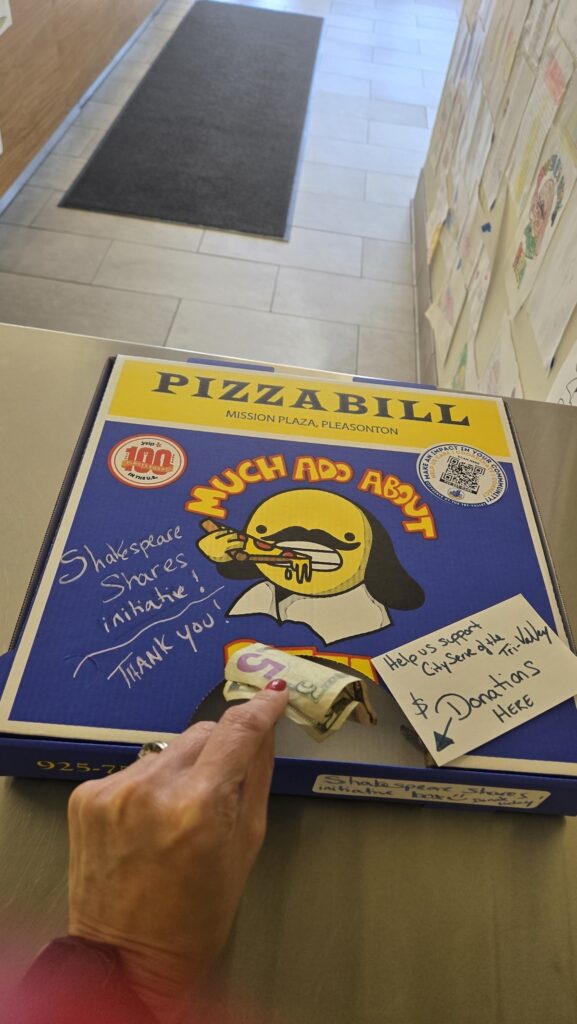
Zabrowski: At Much Ado About Pizza, Shakespeare isn’t just a clever name—it’s woven into everything we do. Being a carryout-focused pizzeria has its challenges, so we went all-in on making the experience special, right down to the pizza boxes and the British-sounding virtual attendant. Every detail is an opportunity to surprise, delight and give guests a taste of the story we’re telling.
From Renaissance hats on our team to theatrical decor on the walls, we create a playful, interactive vibe. Guests can enjoy coloring pages, stickers and mini arcade games while waiting for their order, making even a quick pickup feel like a little event. Our menu leans into The Bard, too, with pizzas like the Henry the 8, Fowl-Staff, Tempest andMontague, and our social media and events keep that same sense of creativity, humor and community.
Shakespeare gives us a framework to tell stories, connect with our neighbors and make pizza more than just a meal—it’s an experience. Even in a carryout model, we aim to create moments that are memorable, playful.
PMQ: How do customers react to the Shakespeare theme?
Zabrowski: Customers love it! The Shakespeare theme immediately grabs attention and sparks conversation—people smile at the pizza names, joke about our Renaissance hats, or linger to check out the theatrical/pizza decor on the walls. Even though we’re carryout-focused, the theme gives guests something memorable to engage with while waiting. Some customers come in reciting lines from the plays, while others make up their own Shakespearean quotes with a pizza twist. It’s hilarious, creative and always unexpected.
It also makes the experience feel playful and special, which keeps people coming back. Families, theater lovers, pizza lovers and first-time visitors all get a little something different from the usual pizza run.
PMQ: Do you meet a lot of Shakespeare fans at work, or do people who love Shakespeare travel to visit it?
Zabrowski: Every once in a while, we get visitors from far away, and it’s always fun when someone tells us they were just in London or Ashland, Oregon, seeing a Shakespeare play. Most of our customers aren’t theater scholars, but plenty appreciate the playful nods, clever pizza names and theatrical touches. It’s especially fun to watch people who don’t realize the theme at first—then suddenly “get it” and start laughing, joking or even making up their own Shakespearean pizza quotes.
PMQ: Have you worked with any related local businesses, such as those in theater, poetry or the arts?
Zabrowski: Yes! Supporting the local arts and education community is something we’re really passionate about. We’ve partnered with local school programs to provide pizzas, and we love collaborating with theater and arts groups whenever we can. Our Shakespearean theme naturally ties us to the creative community, and we enjoy creating events, fundraisers and pizza experiences that celebrate local artists, writers and performers. It’s all about bringing people together, whether through pizza, learning or the arts, and giving back to the community that supports us every day.
PMQ: Is there anything else you’d like to share about your business and its theme?
Zabrowski: At Much Ado About Pizza, our Shakespearean theme isn’t just a gimmick—it’s the heartbeat of our business, and we work hard every day to keep it consistent across everything we do. Every detail is an opportunity to bring the theme to life. We’ve found that leaning into the concept fully and having fun with it makes a big difference—it invites guests to smile, engage and feel part of something playful and unique.
We see our branding as a bridge between our food, our community and our story. It’s why we create interactive touches. It’s why every pizza has personality. And it’s why we put care into social media, events and collaborations with local schools and arts programs—so the theme isn’t just decoration; it’s a way to educate, entertain and connect with people.
For us, authenticity is everything. Leaning into the branding doesn’t mean forcing it—it means staying true to who we are, letting our love of pizza, sourdough, theater, creativity and community shine through, and finding joy in every detail. It’s hard work, but it’s worth it. When the theme resonates with a guest, sparks a laugh or creates a shared moment, it reminds us why being consistent, intentional and playful isn’t just fun—it’s the core of what Much Ado About Pizza is.