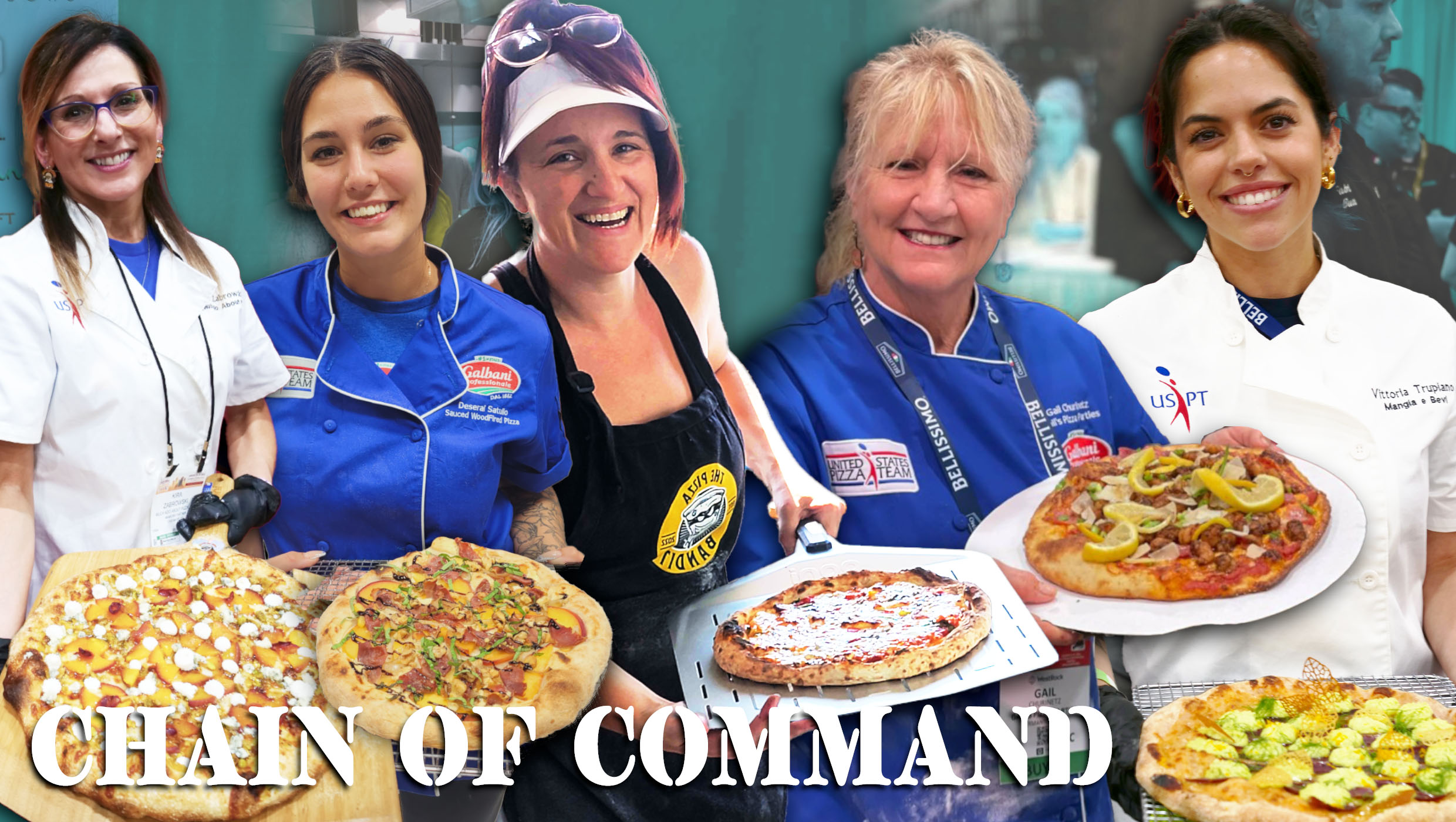
Five female members of the U.S. Pizza Team talk craft, confidence and making themselves impossible to ignore.
There are a lot of ways to get into pizza, and the women helping shape the U.S. Pizza Team (USPT) prove there is no single route. Some came in as entrepreneurs, while others were born into it. For still others, it started as a hobby that became a calling. What connects them all is dedication to the craft, their response to pressure, and their willingness to learn, trust their instincts and keep moving. In an industry that hasn’t always made women feel seen and heard, that matters. These women didn’t wait around for a ceremonial green light; they took command of the kitchen, got out on the floor and made themselves part of the conversation.
Kira Zabrowski, co-owner of Much Ado About Pizza in Pleasanton, California, came to pizza during COVID, when her sourdough baking turned into something bigger. “When I started making pizza, I thought, ‘Wow, this is really great. This could be my next adventure. This could be my next job, my next career,’” she recalls. That adventure became a business and a major life pivot, but it also introduced her to how male-centric the pizza world could feel. “I didn’t know it was so male-dominant until I went to the Expo in Vegas, and I was like, ‘Oh, there’s a lot of men.’” But she didn’t let that hold her back. Her advice to women entering the business: “Do it. You’re just as good as a man.”
In Memphis, Tennessee, Gail Churinetz built Gail’s Pizza Parties differently, bringing  pizza directly into people’s homes for special events and turning each experience into something that’s part craft, part hospitality and part education. “It’s important for them to know my background before I go into their home,” Churinetz says. “There’s a craft to this.”
Churinetz is happy to see women finding one another in the pizza community and refusing to let each other feel isolated. “The women automatically have a bond: Hey, we’re doing this!” she says. “There’s only a handful of us at most events, and if I can help you, I’m here.” That’s not some polished talking point—it’s how you make sure the next woman walking in doesn’t feel like she just got dropped into Top Gun without a call sign. Affirmative, Ghost Rider. The pattern is clear!
Vittoria Trupiano grew up in a pizza family—her father owns Mangia e Bevi in Oceanside, California—and 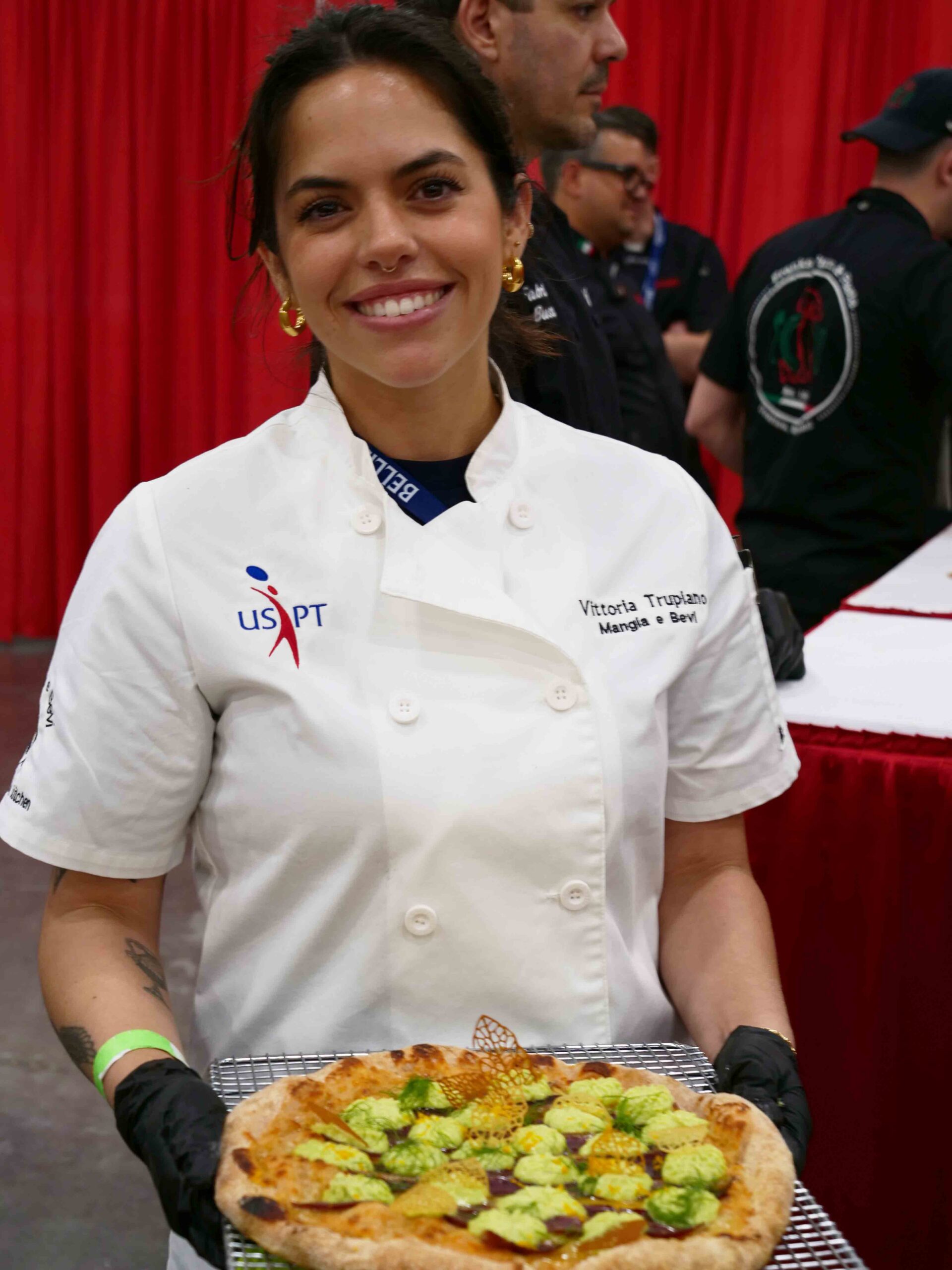 has noticed that respect often feels like something you have to earn twice as a pizzaiola. “I felt like I had to prove that I belonged, not just because I was young, but also because I’m a woman,” she says. “Respect looks like being taken seriously for your work, regardless of gender. It means being treated as a professional, having your voice heard, and being judged based on the quality of what you create.” Her best advice to women: “Don’t be afraid to take up space in this industry.”
Meanwhile, Melina Piroso of The Pizza Bandit brings a different kind of energy to the group, one rooted in visual creativity, intuition and a clear point of view. “I believe color is an ingredient,” she says. “People eat with their eyes.” She is just as deliberate about how she builds her Littleton, Colorado brand, taking seriously the advice to  “build your audience before you launch your brand or product.” That’s how she generated real-world momentum before The Pizza Bandit was even fully established.
Finally, Deserai Satullo, co-owner of Sauced Wood Fired Pizza & Catering in Fairview Park, Ohio, made her own statement at the Pizza Senza Frontiere—World Pizza Champion Games, held in Rimini, Italy, in January. It was her first international pizza competition, and she  placed fourth in the Pizza Fritta category. That finish deserves real attention, especially since she was confronted with a disadvantage from the start. “I did a pizza that had strawberry preserves, arugula, prosciutto, Brie cheese and a strawberry balsamic, all in a wood-fired oven, which I’m very comfortable working with at about 800°. The oven they gave me was at 500°. It is what it is.”
Taken together, these women aren’t telling one neat, polished story, and that’s the point. Zabrowski built a concept-driven pizzeria, pushing past assumptions. Churinetz turned pizza into an intimate, craft-forward experience. Trupiano knows exactly what respect should look like. Felix brings originality and style without sacrificing substance. And Satullo showed that when women get their shot on a big stage, they know how to make it count.
And if women in pizza are more visible now, it’s not because someone finally decided to be inclusive. It’s because pizzaiolas like these U.S. Pizza Team members walked in, showed their skills and made themselves impossible to ignore.
Brian Hernandez is PMQ’s associate editor and coordinator of the U.S. Pizza Team.